Switzerland

Cycling in Winter

After cycling over 1100 kilometres in 2015, I aim to cycle 1200 kilometres in 2016. This goal is an easy one to achieve. It’s the 21st of January and I already have 100 kilometres logged. The weather over the last three weeks has been cold and wet. We have had rain almost every day and it recently turned to snow. As there is a lack of good weather there is no choice but to go out in the bad weather. Cycling in these conditions is messy. Your clothes get soaked from the rain and as I cycle in the countryside I come home covered in mud. When I get home I change into dry clothes and I recover quickly. Rain is easy to deal with once you’re ready to feel wet and dress for the cold. What is more challenging is cycling on slick tires on snow. Some of the roads I cycle on are salted and cleared but as I also use agricultural roads they are covered in snow. Safety takes focus and concentration. The rear wheel skids if you apply too much force to the pedal and the bike can skew if you are not careful. Cycling in such conditions is not ideal. It demands resistance to the cold, stamina to continue making the effort and determination to set an achievable goal. I will continue towards 200 kilometres by the end of February. Cycling consistently now will make summer all the more pleasant and rewarding.

Cave Exploration in Autumn - Grottes Aux Fées - Vallorbe

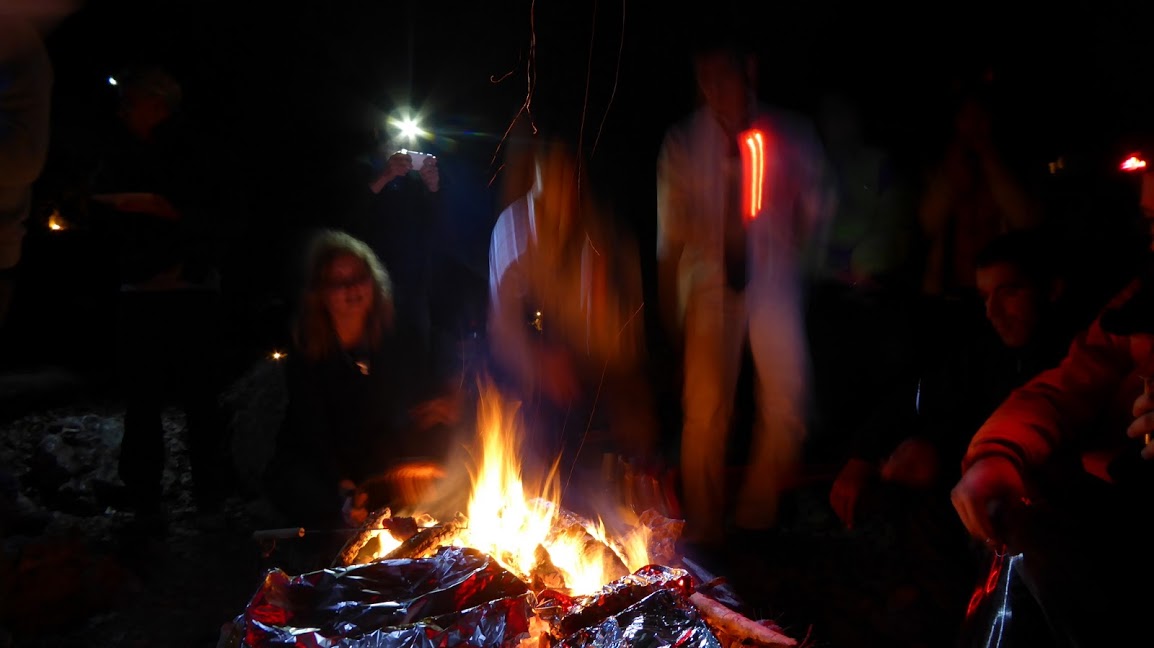
When the temperature drops and we find ourselves living beneath the clouds for weeks or even months going up to the mountains to get above them is always pleasant. Another option is to take advantage of the cool temperatures to explore caves where the conditions are constant year round. For Halloween a group of us went to have a bonfire and barbecue at the entrance to the Big cave of the Grottes des Fées. [caption id=“attachment_2665” align=“aligncenter” width=“660”]Improvised BBQ Improvised BBQ[/caption] We explored both caves. We explored the large cave as far as it was possible to do, had a snack and then we went to the second smaller cave. The video below shows the entrance to that cave. The video above is from when the snow melts. As the snow melts so much water is released at once that it floods the cave around once a year. The cave system has 21 kilometres worth of tunnels, passages and more. Animal remains were found within, mainly fossils and cave bears. The earliest records of  this cave system date to the 1700s with more exploration taking place in the 1800s with notable water flow in the 1950s and again in the 1990s. Over the last decade people have explored the cave system using wind as a way of seeing where new passages could be found. We see in many of the accounts written in french that an important aspect of cave exploration is finding the wind. It marks where big chambers are and where excavation of debris can take place to clear paths wide enough for people to cross through. The large cave is easy to explore as it is possible to spend most of the time and there are no or at least very few squeezes. The large cave terminates at a metal door where progressing further is not possible unless you are with a trained guide to introduce you to the really interesting parts of the cave. The small cave is more interesting to visit because it gets cramped and there are moments where you have to worm your way along. Either your arms are ahead of you or behind you. There is no way to move them once you cross through. In total there are two or three such passages. As it widens after these squeezes the motivation to explore remains intact. Tomorrow we will finish exploring the little cave and in future, maybe in summer we will find a guide to help us explore the rest of the cave system.

Lensational - Empowering Women through Photography.

From Friday to Sunday this week SIGEF2015 took place at the Batiment des Forces Motrices in Geneva Switzerland. This event was organised by Horyou, a social network for social good, where people were connecting and networking, discussing how best to help people with various projects around the world. Living in the Western World we hear and see selfies of friends and many images of food, autumn and things they find appealing to look at. Lensational is a project to bring photographic equipment and photography skills to people around the world. They recycle cameras, resell cameras, conduct photography training and sell photographs. They are looking for camera donations from both private individuals and corporations so that they can resell these cameras at an affordable price to those who would otherwise not have access to digital cameras. Women are then taught by NGOs and photographers about photography and this is seen as a means by which to empower women. Some of these images are then sold internationally to provide these women with additional income from stock photographs. Photographs by Marginalised Women. Photography is a pleasant and enjoyable way of understanding daily life. It provides us with moments or instants from people’s lives. In these images we can see how people live and how they have fun. It is a window in to their world and now that technology makes it possible sharing our day to day lives has become easy. We no longer require National Geographic, GEO and other publications to show us how other cultures live. We can now gain access directly with these people. It also gives marginalised women an opportunity to represent themselves.

Chamois at La Dôle

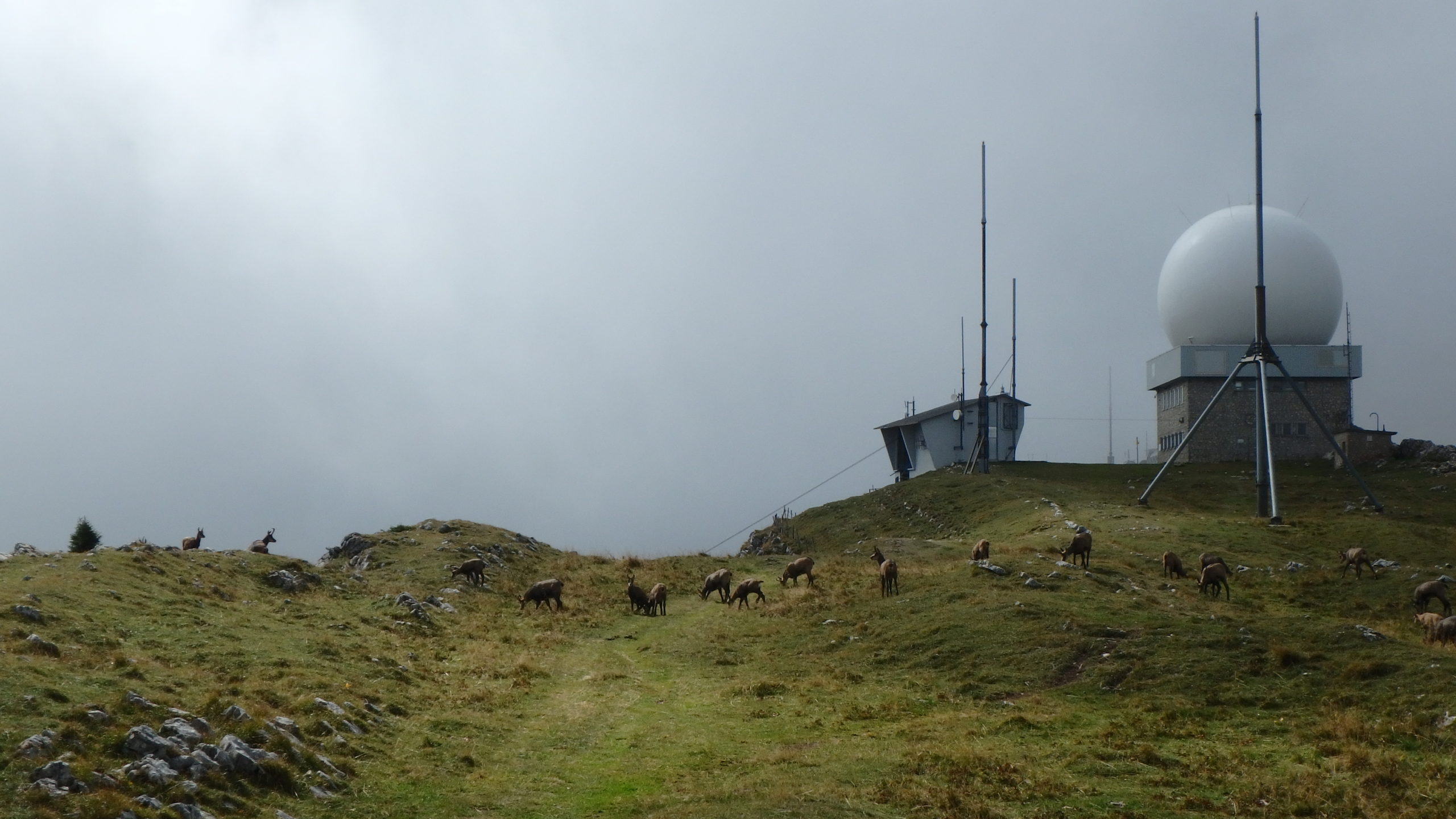
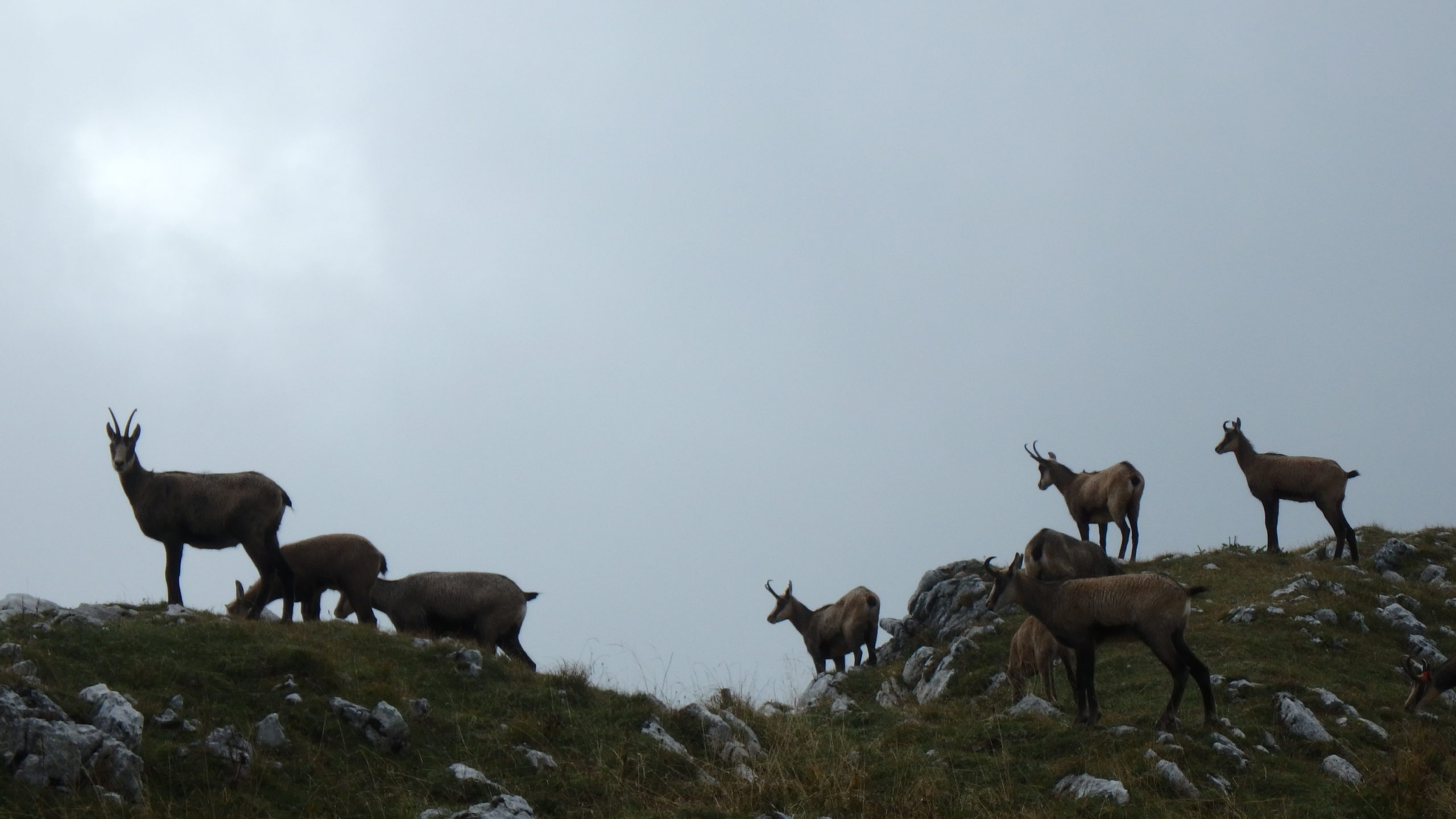
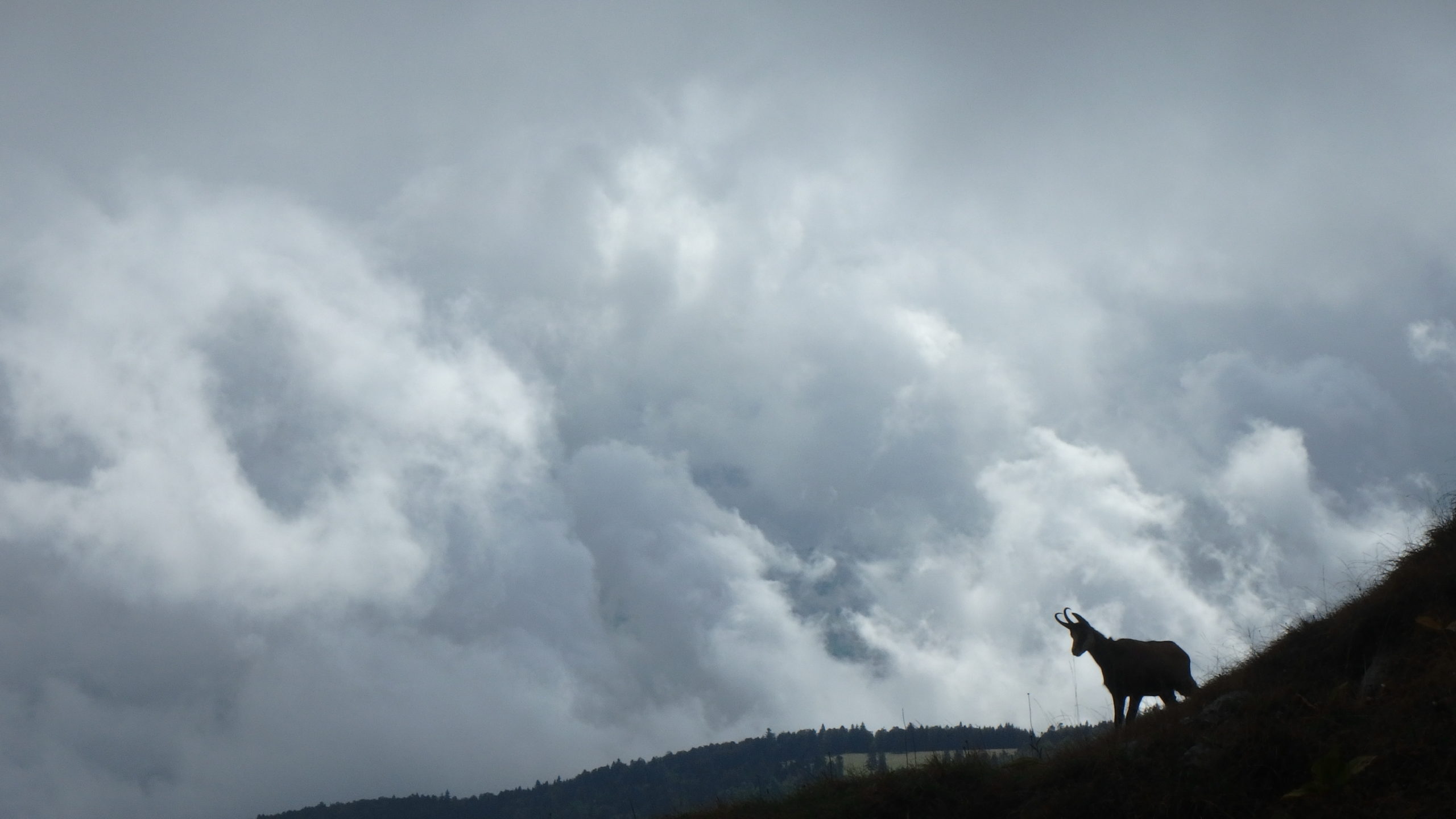
[caption id=“attachment_2556” align=“aligncenter” width=“660”]A chamois silhouetted against the clouds up at la Dole A chamois silhouetted against the clouds up at la Dole[/caption] When the weather is cold and grey as it is today people are not tempted by a walk in the mountains. Chamois at la Dôle are more relaxed, especially up at La Dôle. They are hidden by the clouds and if humans are coming then they will smell them long before we get to see them. On Friday of last week we were lucky. With a friend we decided that we would eat lunch at La Barillette after going for a short walk up from the radio mast to the Sky Guide facilities above. There was a light drizzle and the clouds were playing. At moments we could see the top and at other moments it was hidden by clouds. We walked up the path and saw a few cows spread about the landscape. As we started up the steep path and arrived to where the path flattens we could see two or three chamois in the distance. I thought at first that it was just the mother I had seen several months earlier with her young one. As we approached and as the wind blew away some clouds we saw a full herd. [caption id=“attachment_2557” align=“aligncenter” width=“660”]A herd of Chamois up at La Dole A herd of Chamois up at La Dole[/caption] This was excellent. It is rare to see so many of them so close together like that and from such a short distance. At moments we were just metres away from them. It was a rare and welcome privilege. [caption id=“attachment_2558” align=“aligncenter” width=“660”]Chamois approaching the cliff edge Chamois approaching the cliff edge[/caption]

E-bikes, autumn and the changing seasons.

One evening this week I was walking in the countryside at the foot of the Jura enjoying the evening when I walked by a couple. They were sitting on a bench looking across some fields towards the Mont Blanc, the Alps and of course the Lac Léman. Leaning against the bench were two e-bikes with good suspension. It made me think about retirement and free time. It encouraged me to think about the freedom and pleasure of exploring the landscape on a bike without having to make the same effort as if you were on a conventional bike. I thought of the range it would offer and the gradients you could climb. It would in essence give you the freedom of a car with the practicality of a bike. Of course there is a barrier to enjoying this pass time and that is the price of these bikes. In Switzerland they cost as much as a scooter. They lack the range and flexibility though. Electric bikes, in relation to road bikes are in fact cheap. [caption id=“attachment_2551” align=“aligncenter” width=“484”]Enjoy some freedom, swap your car for a bike for two weeks Enjoy some freedom, swap your car for a bike for two weeks[/caption] I already alternate between a car, a scooter and a bike and with the change in weather I prefer the comfort of the car or the speed of a scooter. If it’s raining then I would much prefer to use the car. It is a shame that they have this promotion at the end of the pleasant season. If they had this promotion at the beginning of summer then I would have taken advantage of it. I will take this option if they offer it next year.

A chevreuil in 4K

Yesterday I went for a walk around the foot of the Jura and there is an enclosure where deer are kept waiting to be slaughtered for meat. As the Chasse season is coming up this park might not be as busy. This video was shot using the Sony Xperia Z3 compact. The image is a little blue for my liking. I look forward to testing the Xperia Z5 compact with it’s improved sensor and new image stabilisation technology. I have no 4K monitors on which to assess image quality at the moment.

Switzerland, Fitness centres and the mountains

For three years I was a fitness club member. I loved going to the gym up to three times a week when possible. I loved training so much that I bought apps and devices to track my progress. Any time that I could not spend three sessions a week at the gym I felt disappointed. That passion, when you are in full time work can be hard to keep active. I tried going to the gym at 6am and I tried going after work but the habit never picked up. In Switzerland fitness memberships can vary from 700-900 CHF per year to over 1200 CHF per year depending on the membership perks you take. If you go to the gym 52 times a year that’s 23 CHF per session. If you go twice a week it’s reduced to just 11 CHF per week. If you go three times a week it’s 7 CHF per session. In theory this is a reasonable price. It’s less than a week’s pay for most professionals. In practice you want to justify the expense. You want to go to the gym when you have time. This means weekends, evenings and on public holidays. I was often frustrated to have free time but for the gym to be closed. I would love to see gyms that take your outdoor sporting passions in to account. Running and cycling are already somewhat covered in the lac Léman region of Switzerland. What I would like to see next are ski days, via ferrata excursions and canyoning within the club. During week days and when the weather is bad you would train in the fitness centre. As soon as summer weekends and holidays would allow then as a fitness centre you would enjoy the great outdoors. I see through Glocals and facebook groups that the interest to do activities in groups is there. Fitness centres could attract a younger demographic to join. I love physical fitness and I love exercise. If I lived in a city like London or Paris I’d be happy to sit in a gym and train. I’d have filtered air and less traffic to contend with. As I live in the Swiss countryside though I want to take full advantage of what nature has to offer. When I find a fitness club that offers discounted canyoning, waterskiing and other activities, and subsidised via ferrata and ski days then I will rejoin.

Social Media and Via Ferrata

People on linkedin were discussing whether social media campaigns are worth organising and keeping. When it comes to extreme sports such as Via Ferrata, rock climbing and other extreme sports then I believe that the audience is ready and enthusiastic enough for a social media presence to be desirable. Via Ferrata is an outdoor sport that can be practiced in France, Italy, Spain, Switezrland, Austria, Germany, the United Kingdom, the United States, Canada and Peru. As a result of the diverse place where this sport can be carried out so social media became an excellent avenue through which to share information about the sport.   I have loved the sport of via ferrata for five years now, half a decade. What I loved about it was the simplicity of the sport. After just two or three climbing lessons and going with a guide once I saw that I could handle via ferrata comfortably without a guide. I always insisted that I would take people with rock climbing experience, not absolute beginners. Via Ferrata is a specific sport requiring specific equipment and specific experience. It requires a head for heights and an ability to hike for an hour or two before a climb and another hour or two after the climb. As the locations are usually remote it also requires someone with a car and whom can navigate. Social networks such as Glocals for Geneva and Lausanne, Xdreams, for Geneva specifically and the Via Ferrata Suisse group for the French speaking part of Switzerland are good places to find participants. The first two examples are to connect with the international/english speaking community and the latter is to connect with the French speaking community. Glocals is a local social network helping the international community in Geneva, Lausanne and other cities to meet up and be active. Through this site you can meet people to work on hangover, meet people to scuba dive and meet people to do outdoor sports such as hiking, climbing, via ferrata, swimming, canyoning and much more. Due to the nature of the social network are spread around Switzerland and the meeting point is usually the event, with car sharing from strategic points.   Via Ferrata Suisse is a nice online community for French speaking via ferrata practitioners on Facebook. As they are spread across the French speaking parts of Switzerland they can provide information and tips on via ferrata that are local. Aside from connecting people social networks and social media are great for the sharing of pictures, personal accounts and textual information about via ferrata. Some people want beautiful landscapes and so pictures will help them select which via ferrata to do. Others are afraid of heights so they will avoid being too far from the ground. A third group will look at how exertional via ferratas will be. I have seen two people run out of energy at Plan Praz and I have seen everyone feel weak by the time they finish the Leukerbad Via Ferrata. Tourism professionals and equipment manufacturers can benefit from a social media presence. I see that Iloveclimbing, Suunto, PETZL, Mammut and other brands actively share the adventures that either their athletes or enthusiasts of their equipment are enjoying. It’s a great way to make me dream of going to some locations, getting that piece of kit or trying an activity at that time of day. To give a specific example I have wanted to do the Moléson by night Via Ferrata for years now and have never got around to it. For two or three years it was because of work and this year it was because of the weather and because I had already booked Leukerbad for the weekend it was moved to. Next year I will make it. I love suunto, Mammut and PETZL. Rather than advertise to the city dweller like Apple, Fitbit and withings do they organise social media campaigns around the great outdoors and around extreme sports. As a result of their social media policy I identify very strongly with their products. In the case of suunto I have dive computers and fitness watches. I understand the passion that their athletes represent in their social media campaigns. Social media is about socialisation and passion. Via Ferrata is a sport that people feel passionate about but because it requires physical fitness and a head for heights your pre-existing group of friends may not be the best suited for your passion to take off. That’s where social networks and social media can help find new via ferrata, see what to be wary of and meet new people. According to these three parameters Via Ferrata and social media are perfect for each other. Sports companies, tourism offices and transport infrastructure would result from a social media presence.
The Leukerbad Via Ferrata

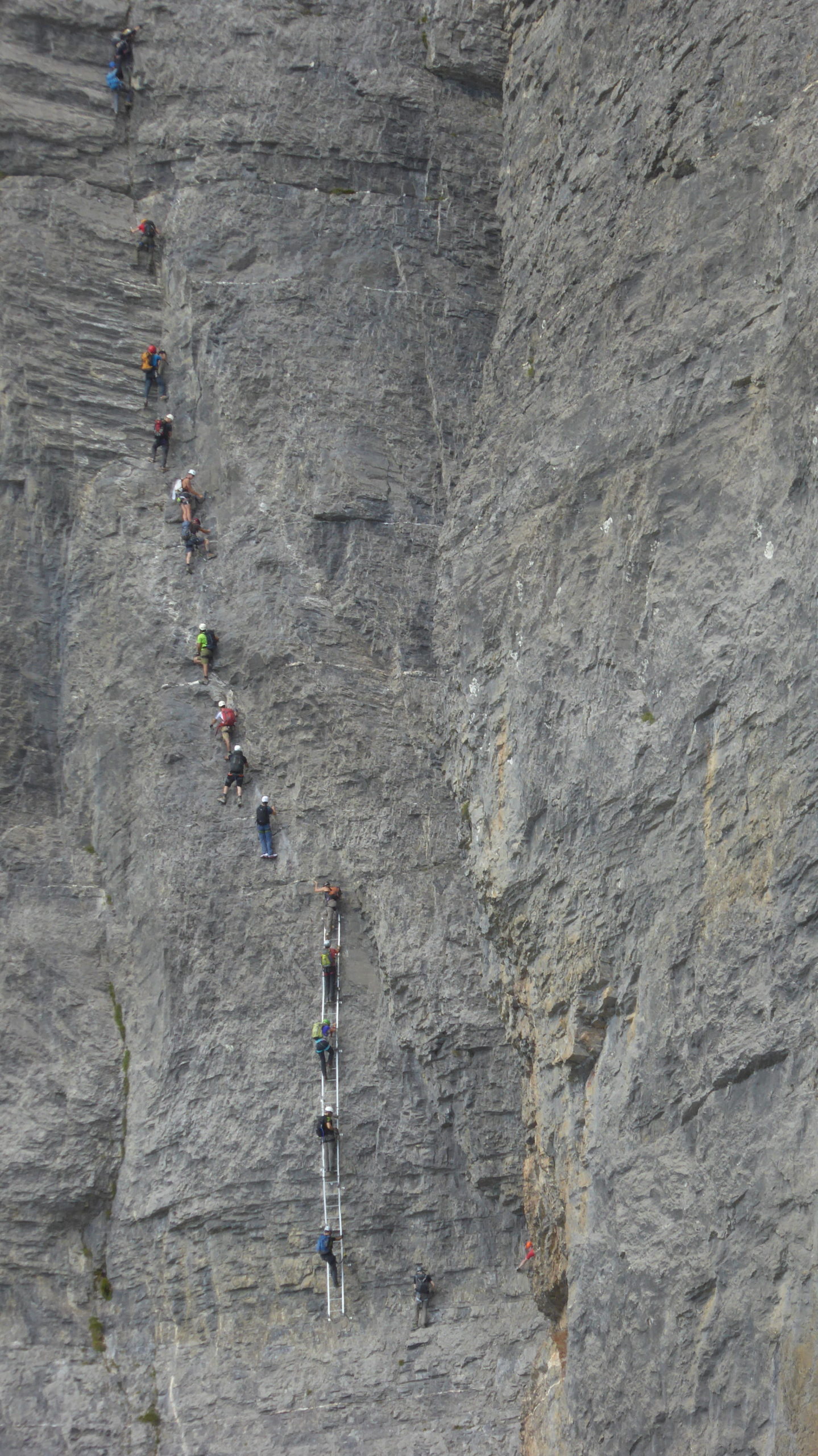
The Leukerbad Via Ferrata is a mythical Via Ferrata for those who practice the sport in the french speaking part of Switzerland. It is mythical both for the duration and for the vertical movement. The climb itself takes around 5hr30-6hr and the vertical change is 1000m. Via ferrata is rock climbing for tourists. A team of specialists look at a climbing route and then install a safety cable, spikes and other features to help people climb the via ferrata. The cable is static. Via ferrata have a number of origins. Some via ferrata routes are along old smuggling routes, others were used by the French resistance as hide aways and others were used to get troops from one side of the mountain to the other during the first world war. In the 1960s to 1970s they were reinstated to attract tourists. Leukerbad is a spa town with a collection of baths heated by geothermal activity. This year I chose to stay at the Alfa hotel and the price included access to a covered parking, access to the spa and access to the lifts. When you see that the lift is 34CHF and the Spa is around the same price the saving is interesting. As the town is small I parked the car when I arrived and did not use it until I left. People like to catch the first cable car up and try to make it down before the last cable car down. Walking down to town is possible but most people are knackered after the via ferrata. The Via Ferrata has three main parts. The first part takes you from the base of the Via Ferrata, by the big Swiss flag and up to a terrasse where grass grows and people have snacks. If you are not used to spikes then this route will surprise you as much as it did me. I would recommend finding a shorter Via Ferrata (VF) with spikes before doing Leukerbad. [caption id=“attachment_2498” align=“aligncenter” width=“576”]Usually the Via Ferrata is not this busy. Two or three groups were active this weekend. Usually the Via Ferrata is not this busy. Two or three groups were active this weekend.[/caption] The second part can be tackled one of two ways. The first way is to climb up as a climber, using foot holds and hand holds wherever you can find them. For those with less experience pulling yourself up with the cable is possible. If you use the cable then do not make the mistake I made my previous three times. If you are not afraid of heights then pull on the cable perpendicular to the cliff. It’s easier. This requires that you are not bothered with heights. The route has been changed. It used to be a more direct and upwards path. Now the path zigzags until you get to the cave. Half way up the path to the cave a new VF variant is being added which takes you to the right and upwards towards a nepalese bridge before rejoining with the main route. The cave is interesting. It gets darker but you do not need a torch. In the cave you have two variants, easy, and hard. The easy route is along spikes and you climb up a ladder. The hard route has standard hand holds, a wooden bridge and then crosses over to the main route. Where the two paths intersect you exit the cave and go up a chimney. The Chimney is relatively easy and you can rest against the wall. It then traverses right and you go upwards. As there are few hand holds and footholds you can either rely on climbing experience and climb using the rock or you can use the cable as I described in a previous paragraph. There is eventually a small plateau where you can have a quick snack, a drink and restore your energy. You still have a few more minutes of climbing until a real plateau. From this plateau you can enjoy the view. This is the point by which I was usually exhausted. For the first time doing this via ferrata I was smiling at this point. Usually I’m exhausted and can’t wait for it to be over. The passage through the cave you do on foot is nice but I have never had the courage to go over the edge and climb up. I take the footpath across the scree field to where the two paths intersect again. From here you have another half an hour of climbing to a slightly overhanging ladder. When a VF friend got to the top of the ladder and saw over the crest she said “Wow” because that view is so spectacular. The source of the “Wow” is a large circus with two glaciers. This year the glaciers had a lot of snow and you could clearly see the curves which illustrate glaciers in action. [gallery columns=“2” ids=“2496,2497”] If you take the Alfa hotel then your entrance to the spa is free. You will need to ask them for a card for the locker. The spa has a bath fed with warm volcanic water at 47 degrees and with larger cooler pools. Those pools are at about 36°c. You have the choice between bubbles or jets. For food I ate pasta the first night. On the second night I had an entrecôte Sauce Café de Paris and it was delicious at the Pizzeria Giardino. While I was capturing portals whilst playing Ingress I walked through the old town of Leukerbad and found these traditional buildings and implements. [gallery ids=“2501,2502,2504”]